
Lessons learned...
Only 946 days to go...

“True leaders must learn from their failures, use the lessons to motivate themselves, and not be afraid to try again or make the next tough decision.” ~Retired Admiral William H. McRaven
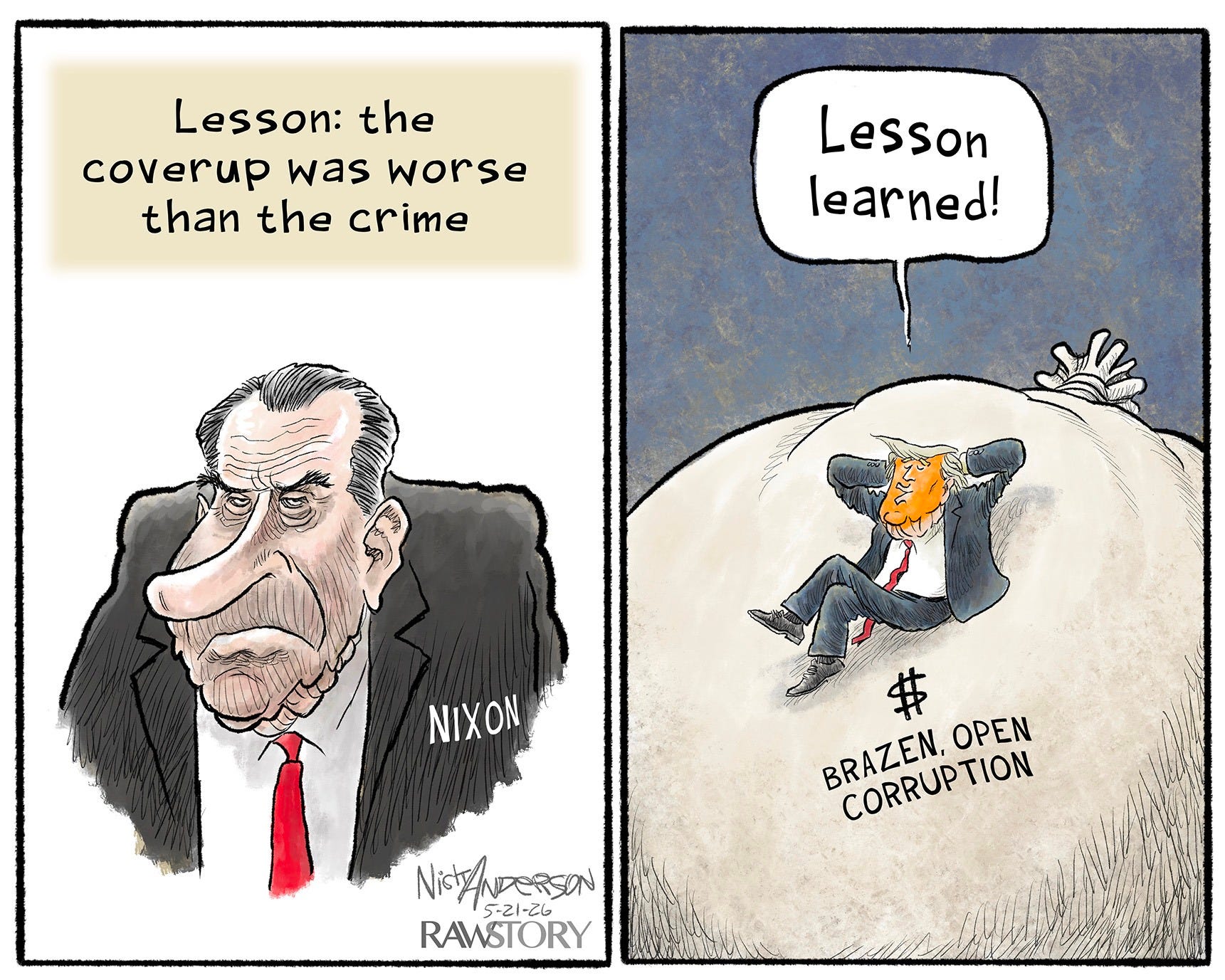
When I worked on consulting projects, we were always asked to document our work so that the next team might be able to use some institutional knowledge gained from the project. It was usually how we finished things, but by that point people were ready to move on, so the documentation phase was often cut short. I found that the really informational aspects of projects were often learned over a drink, where “war stories” were regaled as people turned their wins and losses into humorous, albeit informational, anecdotes.
When I went to work in the UK, they actually formalized the process. They had sections in status reports and off-site meetings devoted to “Lessons Learned.” I’ll be the first to concede that Americans tend to have short memories and are not that great at analyzing past actions and behavior. The Brits, on the other hand, are maybe too willing to analyze everything. Regardless, I found the exercise very useful and tried to incorporate it with my teams after I returned to the States. As Henry Ford once said, “The only real mistake is the one from which we learn nothing.”
Sometimes I wonder whether Trump learned any lessons from his first administration. Wait, let me change that sentence — I wonder whether Trump learned any lessons that might benefit someone besides himself.
Clearly, he learned one thing: obsequious loyalty matters more than competence when it comes to staffing one’s administration. This second time around, he stacked the DOJ with loyalists, put allies in the Pentagon, and systematically removed anyone who might put the rule of law ahead of his personal interests.
But public health? Governing in the face of a crisis that requires scientific expertise, institutional knowledge, and coordinated government response? When it comes to actually effective governance, he learned absolutely nothing between 2017-2020.
Consider COVID-19. Trump’s first-term response was initially marked by denial and an assault on the basic mitigation strategies that public health experts recommended. Federal failures in the early months led to tens of thousands of excess American deaths.
I’ll give him credit for one thing: Operation Warp Speed. With bipartisan support, the US invested more than $12 billion in a public-private partnership to develop vaccines at unprecedented speed. The result was a genuine triumph. mRNA vaccines from Pfizer-BioNTech and Moderna were ready in December 2020, only eight months after Warp Speed began. The US donated 800 million vaccine doses globally — more than twice any other country. Vaccines are believed to have prevented 19.8 million deaths worldwide.
If there was ever a case study for what robust, science-backed government investment can accomplish in a crisis, that was it. A real Lessons Learned meeting could have started there. Instead, he distanced himself from his one accomplishment when his supporters turned out to be vaccine denialists, and handed the public health system to Robert F. Kennedy Jr. — a man whose defining political identity is distrust of the very vaccines that stand as Trump’s single greatest policy achievement.

The results have been predictable. RFK Jr.’s FDA refused to review the first mRNA flu vaccine developed by Moderna. The official reason was an inadequate trial, but since Moderna had already discussed trial design with officials, it reads more like a pretext for Kennedy’s longstanding anti-vaccine ideology. Moderna’s CEO has said the company is pulling back on crucial investments in late-stage mRNA vaccine trials, because “you cannot make a return on investment if you don’t have access to the US market.” That means advances in vaccines for shingles, herpes, Epstein-Barr, even pancreatic cancer — all potentially shelved.
And measles? The worst outbreak in the US in 30 years is unfolding, with the largest number of confirmed cases since 1992. As of late May 2026, nearly 2,000 confirmed cases across 40 states, with 30 new outbreaks — on pace to easily eclipse last year’s record. The CDC has warned that the US could soon lose its measles-elimination status altogether, a public health designation we have held since 2000. Up to 3 out of every 1,000 infected children will die. According to the Common Health Coalition, a single 1% decrease in the childhood MMR vaccination rate could cause 17,000 cases, 4,000 hospitalizations, and 36 preventable deaths every year.
The lesson that should have been learned from COVID was: invest in scientific infrastructure, trust the experts, build the systems that protect us before the crisis arrives. The lesson Trump apparently took was: appoint the guy who doesn’t know what he’s doing… but is loyal to him.
The damage goes beyond the United States. A 2026 Ebola outbreak has spread across the Democratic Republic of Congo and Uganda and aid workers say the gutting of USAID directly hampered the response. When DOGE cut Ebola prevention funding in 2025, Elon Musk shrugged it off at a Cabinet meeting as an accident. Closer to home, in May 2026 a deadly hantavirus outbreak on a cruise ship in the South Atlantic killed three passengers and sent 18 Americans into quarantine — at which point the public learned that the CDC had fired its entire Vessel Sanitation Program, including the epidemiologist who led cruise ship outbreak response, just a year earlier. The CDC, an agency once considered the world’s premier public health institution, has been missing in action since Trump came back into the White House.
And have you been reading about the New World screwworm?
The New World screwworm is a parasitic fly that lays its eggs in open wounds of living animals. The larvae burrow into living flesh, feeding from the inside. Untreated, the infestation kills. The pest was eradicated from the United States in the 1960s through a painstaking program of releasing sterile male flies. We haven’t seen it here since.
Until now…
On June 3, 2026, the USDA confirmed the detection of a New World screwworm in a three-week-old calf in Zavala County, Texas. The warning signs had been blinking red for over a year. Mexico reported its first case in 2024 and saw a 53% increase in animal cases between July and August 2025 alone. The USDA’s own modeling acknowledged that all models showed New World Screwworm entering the country in 2025. They knew it was coming.
As is typical, the Trump administration ignored the warnings. They briefly reopened the US-Mexico cattle crossing ports in February 2025, only to shut them down again in May after the spread accelerated. The USDA did not break ground on a sterile fly production facility until April of this year — and it won’t be operational until autumn 2027. Too late to help now. Meanwhile, DOGE stripped more than 24,000 employees from the USDA, including staff from the very animal disease prevention programs designed to monitor threats like this one. DOGE also gutted USAID, which included a program dedicated specifically to preventing screwworm from crossing the US-Mexico border.
The playbook is by now familiar: dismiss the warning, cut the infrastructure, scramble when the crisis arrives, then blame the previous administration. Agriculture Secretary Brooke Rollins is already pointing at Biden’s “open border” policies — even though the USDA under Biden closed the cattle ports of entry in November 2024, and it was the Trump administration that reopened them in February 2025.
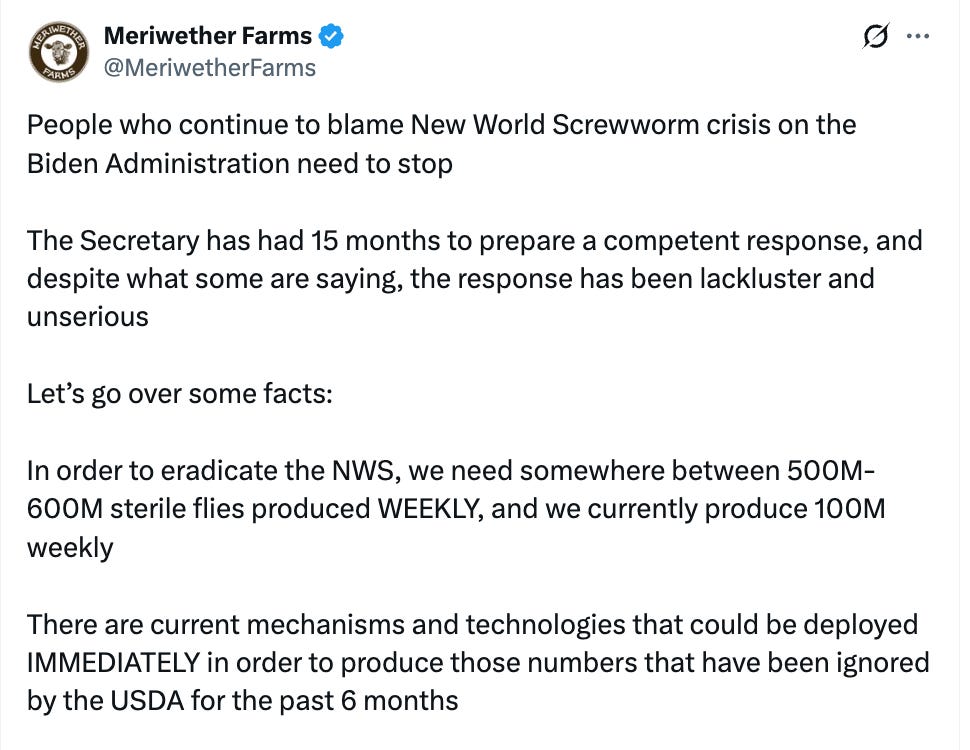
The National Cattlemen’s Beef Association has been blunt: “We need to spend $300 million now to save $8 billion down the line.” The cattle herd is already at a 75-year low. Ground beef hit $7.85 per pound by February 2026 — up 57% since 2020. A full screwworm re-establishment could cost Texas alone $1.8 billion, and Senator Cornyn has warned the broader Texas economy could take a $3.7 billion hit.

The hurricane season started June 1st and where’s FEMA? The lesson previous administrations learned from Hurricane Katrina was that an underfunded, understaffed and poorly led FEMA costs lives. As a result of Katrina, FEMA was reinforced. And yet here we go again.
Since January 2025, FEMA has lost more than 5,000 staffers. The agency began last hurricane season with only 12% of its incident management workforce available — a five-year low, according to the GAO. Nine out of 18 FEMA leadership positions are currently vacant. Six of its ten regional offices have no permanent administrator. Trump has still not nominated a permanent FEMA director. The acting administrator fired a career official who testified before Congress that abolishing FEMA would not be in the best interests of the American people — and had him walked out of the building the next day.
Kristi Noem was eventually pushed out. Her replacement is Markwayne Mullin — the former plumber and Oklahoma senator best known for challenging a Teamsters president to a fistfight during a Senate hearing. Mullin inherited a department in chaos. His first official trip as DHS Secretary was to survey Hurricane Helene damage in western North Carolina — damage that occurred nearly two years ago, where communities are still waiting for their money. Some towns spent more on cleanup than their entire annual budget, draining reserves while waiting months for reimbursements that never came. More than 500 damaged properties remain in limbo. One homeowner, unable to live in her house, is on the hook for a $900 mortgage and a $500 HOA fee every month.
I can speak to this personally. I lived through Hurricane Helene here in Asheville. The damage to this region was devastating and the recovery has been painfully slow. Western North Carolina is Trump country — these are his voters — and even they cannot get a straight answer from FEMA about why their applications are stalled.
As hurricane season begins this month, what has Mullin focused on? He announced he is “drawing up plans” to pull Customs and Border Protection agents from airports in so-called sanctuary cities — effectively shutting down international flight processing at Newark, JFK, O’Hare, and LAX. His rationale: protests outside an immigration detention facility in New Jersey. Even Transportation Secretary Sean Duffy pushed back: “We shouldn’t shut down air travel in a state that doesn’t agree with our politics.” The man running the department that oversees FEMA, as hurricane season opens, is threatening to shut down international airports as political punishment. That’s where his head is.
A longtime FEMA official put it plainly: “The last time it felt fully prepared was probably before hurricanes Milton and Helene in 2024.” (Before Trump took charge). Luckily, the 2025 hurricane season was unusually quiet — the first in ten years without a hurricane making US landfall. There are no guarantees for 2026.
The voters who decided to give Trump a second chance seem to have been suffering from amnesia, delusion, or perhaps both. It was never a secret. The first term made it abundantly clear that Donald Trump was interested in the presidency only as a vehicle for one thing: himself. The leverage it provided to generate wealth for his family and allies, and now in this second term it has provided the tools to investigate “his enemies.”

Without any competency supporting him during this second term, we’ve see how utterly inept this man is…
How Trump makes everything worse in four easy steps.
Here is how the president has approached basically all problems since retaking office last year:
Step 1: Announce your intent to solve some longstanding problem, like America’s trade deficit, or Iran’s pursuit of a nuclear weapon, or the national debt, or an algae-ridden reflecting pool.
Step 2: Ignore all logistical challenges that made the problem difficult in the first place; proclaim confidently that the only reason previous attempts to solve them failed is because your predecessors were giant idiots.
Step 3: Try to solve the problem via the first idea you think of.
Step 4: Fail spectacularly and immediately.
It’s amazing how many times, in just a year and a half, Trump has followed this precise script.
The lesson he took from his first term was not how do I serve the American people better. It was how do I make sure nothing can touch me, and how do I use this office to take care of my own? He learned how to use the presidency as a personal enrichment machine. Mar-a-Lago has become a power center where access to the presidency cost money. Foreign governments book his hotels. His sons cut deals across the globe while their father sits in the Oval Office. The constitutional provision, the emoluments clause, which was designed specifically to prevent a president from profiting off the office has been ignored and ultimately shrugged away. Trump didn’t just blur the line between public service and private gain. He erased it.
Those were the lessons he mastered.
But the lessons of actually governing never registered. They were never of interest, because the American public was never really the point.
So… In western North Carolina, we’re still waiting on FEMA. In Texas, the screwworm is here. In forty states, children are getting measles.
And oh yes, the hurricane season just started.
Thought for the day in honor of his birthday…
“Those who do not have power over the story that dominates their lives, power to retell it, to rethink it, deconstruct it, joke about it, and change it as times change, truly are powerless, because they cannot think new thoughts.”
~Salman Rushdie
Worth Reading
The Apotheosis of Donald Trump On the president’s 80th birthday, it became clear that he has entered his decline.
…the world now faces something new and frightening: a psychotic state. The administration is consistently detached from reality; the normal policy process we have seen in past administrations is nonexistent in this one. No one around the president even hints that anything he does is inappropriate, unpopular, or unwise. His Cabinet meetings have become exercises in self-abasement, with one member after another obsequiously groveling, each trying to outdo the next in their adoration. Trump, left on his own without adult supervision, has lurched from blunder to catastrophe.
I’ve spent my career fighting ebola. Trump’s policy response could be catastrophic.
Right now the United States is choosing to stand on the sidelines, rather than take on a leadership role in confronting the ebola crisis. Instead of taking active measures informed by sound public health data, our government is banning travelers, including health and humanitarian workers returning from affected countries, while stranding vulnerable US citizens on foreign shores. This comes after the administration has systematically de-funded the very organizations created to respond to such a crisis, and waged a broader war against scientific expertise in general and the public health community in particular.
US screwworm cases rise as outbreak spreads beyond initial contamination zones
Screwworm cases are rising in the US as the outbreak spreads beyond the initial contamination zones.
Twelve animal cases have been confirmed so far, a significant increase from the first case detected in a calf in south Texas on 3 June. The growing number of infections has alarmed agricultural experts, who warn that a wider outbreak could have serious consequences for the Texas beef industry.
Of the 12 reported cases, 11 remain active and one is inactive, according to an update issued last Thursday by the US Department of Agriculture’s animal and plant health inspection service…. The infected animals include cattle, goats, sheep and one dog.
The Screwworm Is Messing With America’s Beef The parasite couldn’t have come back at a worse moment.
The second thing you should know about the New World screwworm is that it’s back. Last week, 60 years after the United States was declared free of the fly, the Department of Agriculture announced that it had found larvae in a three-week-old calf in rural Zavala County, Texas, not far from the Mexican border. Four more infected animals have since been identified across Texas and New Mexico: two calves, a goat, and a dog. The U.S. cattle herd is already the smallest it’s been since 1951 (in part because of drought), and the value of cattle is soaring. As meat-packers pay more for the few animals that remain, they’re passing those costs down the supply chain to beef consumers. To meet the demand, the industry will need to invest in new calves and build up the herd. But the White House’s mixed messages on tariffs has made farmers skittish, and the resurgence of a parasite that eats their animals alive may only make things worse.
Trump’s FEMA Nominee Calls Staff Cuts a ‘Challenge’ for Disaster Agency
Staffing cuts have reduced FEMA’s work force by about 20 percent over the past year and a half. Nominated last month to take over the disaster agency, Mr. Hamilton served briefly as acting FEMA administrator at the start of Mr. Trump’s second term. But Kristi Noem, then the Homeland Security secretary, fired him a day after contradicting the president’s assertion that the agency should perhaps be abolished. Ms. Noem has since been replaced by Markwayne Mullin, and the Trump administration now appears to be retreating from plans to eliminate FEMA.
Trump reviews slowed screwworm response, former officials say
Months of initial delays, combined with the exits of dozens of experienced USDA staff amid efforts to shrink the federal workforce, risks seeing the pest spread beyond Texas and New Mexico — potentially resulting in billions of dollars in damages to the cattle industry, according to a USDA estimate. The cattle industry — a loyal Republican constituency — has been one of the few economic bright spots in farm country despite high fertilizer and diesel costs that have eaten into farmers’ profits and Trump’s tariffs that have shrunk their opportunities to sell overseas. A screwworm infestation could even push some ranchers into bankruptcy as they struggle to afford prevention and treatment.
Screwworm Flies and Drought Spell Tougher Times for Cattle Ranchers
The discovery of the New World screwworm fly in the United States this week is threatening to further disrupt an already strained cattle business at a moment when many ranchers are also contending with a severe drought.
The United States herd is at its smallest level in 75 years, even as consumer demand for beef continues to grow. That has driven live cattle prices — and beef prices — higher, which normally would encourage ranchers to begin rebuilding their herds or prompt new ranchers to enter the business. Drought conditions across several states have led to a shortage of grass for grazing, forcing ranchers to sell some of their animals sooner.
Texas Races to Contain Screwworm as a Second Case Is Confirmed
Even before the confirmed case in Texas, the beef industry was facing its fair share of challenges. The American cattle inventory has diminished to its lowest levels since 1952 partly due to persistent droughts and high feed prices. Domestic beef prices continue to climb to record highs.
The screwworm had been eradicated by the mid 2000s from all of North and Central America. But the parasite resurfaced in 2024 after it was detected along Mexico’s border with Guatemala. More than 20,000 cases have been detected in Mexico alone in recent years resulting in the United States barring the entry of all Mexican cattle for more than a year.
In recent days, Sid Miller, the Texas Agriculture Commissioner, accused the federal Agriculture Department of dismissing his concerns of a possible screwworm infestation. “Instead of using every available tool, U.S.D.A. moved too slowly and relied solely on a partial solution that takes years to fully implement,” he said in a statement.
Children’s wellbeing slips across the U.S.
Children’s wellbeing declined nationally from 2019 to 2024, with kids in 29 states faring worse than before the COVID pandemic, according to a new report.
Why it matters: Children’s wellbeing affects future workforce participation and economic growth, and researchers warn rising costs and safety-net reductions could further strain families.
How Prepared Are We for a Public-Health Emergency?
The outbreaks of hantavirus and Ebola expose the shortsightedness of America’s retreat, under the Trump Administration, from its role as a global-health leader… This year, the U.S. formally withdrew from the W.H.O., which has since struggled to obtain sufficient funds to monitor and address infectious threats. The C.D.C. largely received information about the hantavirus outbreak secondhand—forced, as one expert put it, “to rely on the good will of international partners for data that it once would have helped generate.” (Even this is an improvement over last year, when the Trump Administration banned C.D.C. officials from communicating with their counterparts at the W.H.O.) Since Trump returned to office, the C.D.C. has lost roughly a third of its staff, and cuts to foreign aid have hampered on-the-ground programs intended to respond to Ebola and other diseases. According to a study in The Lancet, the shuttering of the U.S. Agency for International Development could result in millions of deaths around the world by the end of the decade.
I Remember America Before the Measles Vaccine And I wish Robert F. Kennedy Jr. did too.
The disabilities resulting from those childhood diseases far exceeded the recorded life-and-death statistics: the compromised lungs, the weakened hearts, the bones and muscles and systems unable to develop as they might have. It’s impossible to calculate the awful toll. Vaccines, though, changed it all, essentially vanquishing those diseases in the United States and much of the rest of the world. The rejection of science is sending us back to those dark ages.
Kennedy Shows Minimal Engagement With Vast Health Portfolio
Kennedy’s approach to the crisis reflects his broader management of the Department of Health and Human Services, which affects the health of 340 million Americans and provides health care to 40 percent of the population through Medicare and Medicaid. He has shown little interest in managing the details of work in his department, according to multiple colleagues. Instead, they say, he is single-mindedly focused on his top priorities, including food recommendations and pesticide exposures, and hunting for evidence to support his long-held beliefs that vaccines are harmful.
Deeply mistrustful of career civil officials, the secretary has surrounded himself with a close circle of handpicked advisers and stacked agencies with political appointees aligned with his views. While major posts have sat vacant and a wave of veteran health experts and scientists have departed, Mr. Kennedy has remained isolated from much of the department’s top staff.
Are We Seeing “Third Wave Trumpism”?
We keep saying that we’ve seen the worst of the worst. But Trump is saying “Hold my beer, I have people who are even more willing to be accomplices in my criming than ever before.”
You could see hive death happening at the American Diabetes Association (ADA) this week. This disease drives a large fraction of early death and vast public cost, nearly all of which is preventable by social and individual behavior choices. One of the older and most validated scout scientists is Dr. Steven Kahn, a professor of medicine at the University of Washington, who also serves as the editor in chief of the association’s flagship journal, Diabetes Care. He was thrown out for handing out one of his editorials protesting NIH abandonment of many preventive policies...The Office of Management and Budget wants to impose restrictions on the kinds of research that can be funded and give political appointees the authority to deny federal funding for research deemed inconsistent with presidential priorities.
An Ascendant Constitutional Theory Is a Threat to American Science The idea of a “unitary executive” is now being extended to America’s scientific establishment, with potentially devastating effects.
One principle has governed science funding in the United States for decades: that scientific judgement should not be supplanted by political pressures. That is the basis upon which the country’s enormous scientific achievements—progress in lifesaving treatments, a university system that is the envy of the world, and a vibrant technology-and-biotech sector—have been built.
But that principle is under attack. Late last month, the Office of Management and Budget in the Donald Trump White House proposed a new regulation that would shift control over the allocation of public science funding away from scientists and toward political appointees, who will have the power not only to decide which projects receive that money but also to, at any time, cancel grants that have already been awarded.